|
| |
|
|
Monday, August 04, 2003 - Page updated at 12:54 A.M. Opera By Melinda Bargreen
Opera fans have been waiting for this "Parsifal" for a long time, and the buzz as eager patrons flooded into the new Marion Oliver McCaw Hall was downright electric. How would the first production in the new hall turn out? Were the acoustics and sightlines and amenities really as good as they seemed in the opening gala last June? Good news: The house looks and sounds great, and the production of Wagner's last and arguably most opaque opera is a musical and theatrical stunner. When you have an audience sitting for a five-hour show about the knights of the Holy Grail in which scarcely anything happens, and still reap one of those "we won the Super Bowl" ovations, you know something magical has occurred. Traditionalists quivered their nostrils in dismay when the design/direction duo of Robert Israel and François Rochaix was announced for this important production, partly because their work in the 1980s "Ring" here (and also in a controversial "Aida" production) ruffled more feathers than a typhoon in an aviary. While there is much about this new "Parsifal" that is not traditional, Rochaix and Israel have come up with a show that not only makes complete sense on the stage, but also serves the opera's themes and ideas in creative new ways.
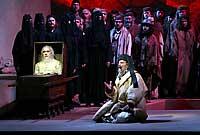
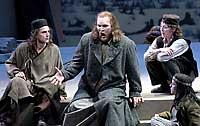
The new theater's superior production capacities are evident everywhere, in all the new possibilities offered by the "trap" areas beneath the stage, and most of all in the riveting digital projections that wonderfully enhance the look of the show. Towering reddish mountains, craggy ice-covered peaks, limpid lakes and grassy vistas all appear and mutate as if by magic. Michael Chybowski's lighting adds considerable punch and drama. Israel's costumes were a bit more perplexing. The company of Grail Knights sported strange multicultural outfits, in which vaguely Middle and Far Eastern attire mixed with Western coats and such headgear as executioners' hoods and fezzes. Amfortas, the wounded king of the Grail Kingdom, apparently is wearing a lace, tiered skirt with a quilted kimono and a beekeeper's headgear. The Flower Maidens — seductresses created by the evil Klingsor to lead the knights astray — were attired in everything from a hot-pink Flying Nun coif to various ethnic outfits in wild colors. Let's just say there was plenty to entertain the eye, not at all a bad thing in a lengthy show. To those who were holding their breath about the new hall's acoustical possibilities with a full-bore Wagnerian opera, the opening performance Saturday came as a tremendous relief. The sound in the hall is nothing short of amazing. Orchestral passages ring out with great presence and warmth; Asher Fisch's conducting delineated the rich scoring, the great gravity and dignity of the music's ceremonial scenes and the propulsive excitement of the conflicts in Act II.
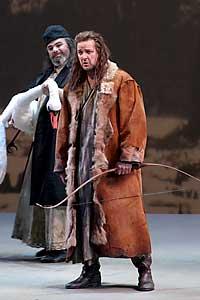
"Parsifal" has substantial choral requirements, both for the company of the Grail Knights and for the offstage chorus — which sang divinely from divine heights, unseen and lurking far above the stage. A tip of the Flying Nun hat to Beth Kirchhoff, who trained the chorus superbly. There wasn't a weak spot anywhere in the cast. In fact, this is one of the best-cast Wagnerian productions in the company's history. Christopher Ventris, in the title role of the "wise fool" who heals Amfortas and saves the Grail Kingdom, displayed an ardent, fresh tenor, singing the difficult lines with ease and with substantial tonal beauty. He's a persuasive actor as well; so is Linda Watson as the tragic Kundry (sent by Klingsor to seduce Parsifal), a role she fully inhabits and brings to vivid life with a big, compelling voice and mesmerizing acting. Rochaix's staging of their pivotal scenes together bypasses operatic cliches and makes the drama fully human. The weight of most of the singing rests securely on the shoulders of Stephen Milling as the knight/narrator Gurnemanz. A powerhouse of a singing actor, Milling makes every line resonate with meaning, and his ability to portray empathy sets the tone for the entire show. Milling towers over most of the cast, and Rochaix uses his height to great advantage, conveying authority, menace or benediction.
Kevin Langan is a memorable Titurel, expertly made up (by makeup designer Joyce Degenfelder) to look so dreadfully ill that I was ready to call 911. Richard Paul Fink works his usual villain-magic as Klingsor — dispatched to his doom as his tower suddenly plunges down into the stage, leaving the audience gasping. The smaller roles also were well taken, with major singers like Doug Jones, Luretta Bybee and Thomas Studebaker lighting up the stage, and more fine performances from Terri Richter, David Adam Moore, Linda Pavelka and Catherine Cangiano, among others. And to those who fondly remember Bambi the stuffed deer (a recurring motif in the Rochaix/Israel "Ring"), this new "Parsifal" has a mascot, too: a little white bird (also lifeless) perches on Parsifal's shoulder in the final triumphant scene. Kitsch, yes, but by then the audience was willing to forgive just about anything. Melinda Bargreen: mbargreen@seattletimes.com
Copyright © 2003 The Seattle Times Company
|
|
|
|||||||||||||||||||||||||||
|
|
|
|
|
|
|
||||||||||||||||||||||||||